ASML shares climb on raised 2026 outlook, capacity expansion plans
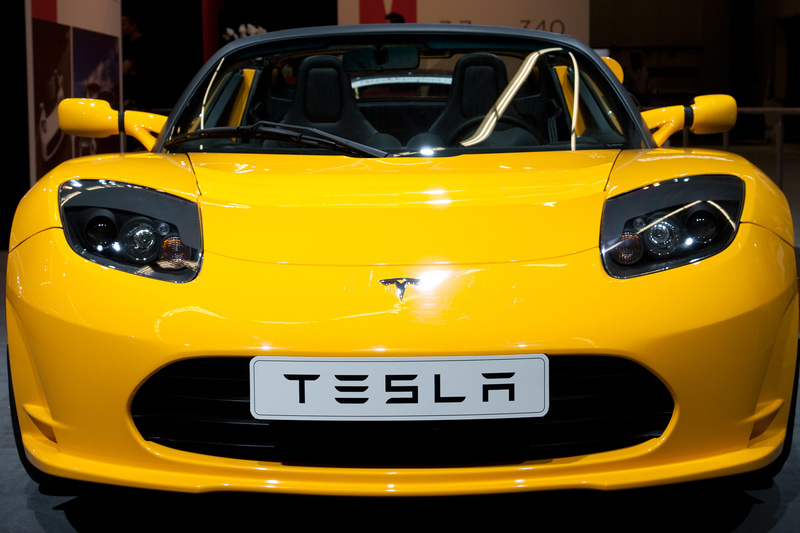
The rideshare giant Uber Technologies Inc. (NYSE:UBER) finds itself at a pivotal moment as Wall Street analysts debate whether autonomous vehicle technology represents an existential threat or a transformative opportunity for the company. The stock has experienced significant volatility, declining approximately 17% since late September 2025, primarily driven by investor concerns about competition from autonomous vehicle providers such as Waymo and Tesla. Trading at $74.48, shares have fallen nearly 16% over the past year and are down 8.7% year-to-date, though InvestingPro analysis suggests the stock is currently undervalued, with Fair Value estimates indicating significant upside potential for patient investors.
The company operates in both rideshare and restaurant delivery markets, each representing an addressable market of approximately $1 trillion. With current market penetration at roughly 5%, Uber maintains substantial room for expansion. The question facing investors centers on whether the company can successfully navigate the transition to autonomous vehicles while defending its market position against both traditional competitors and new technology-driven entrants.
Autonomous vehicle strategy takes center stage
Uber’s approach to autonomous vehicles has become a focal point for analyst discussions. The company has positioned itself as a demand aggregator for autonomous vehicle entrants rather than attempting to develop the technology entirely in-house. This strategy involves maintaining partnerships with multiple autonomous vehicle providers, reducing dependence on any single technology partner.
The partnership with Waymo, a subsidiary of Google’s parent company Alphabet, has expanded to include cities such as Austin and Atlanta. Additionally, Uber has established relationships with Chinese companies WeRide and Pony.ai, which analysts note offer cost-effective vehicle solutions. The recent collaboration between Nvidia and Uber has drawn particular attention, as Nvidia’s announcement of the Alpamayo family of artificial intelligence models and its work with Mercedes on driverless cars could democratize the autonomous vehicle market.
Analysts suggest that Uber plans to own a limited number of vehicles primarily to validate unit economics, while engaging finance partners for an asset-light model similar to hotel management structures. This approach mirrors the company’s existing business model, where Uber provides the platform without owning the underlying assets.
The company views autonomous vehicles as a long-term cost-effective solution compared to human drivers, though expectations indicate that autonomous vehicles will remain a small percentage of total rides in the near term. Analysts project that autonomous vehicle technology will achieve economic viability sooner in high-labor-cost markets such as the United States, European Union, and Japan.
Geographic expansion and product diversification
Uber has announced plans for significant investment in Japan over the next five years, targeting the country’s large taxi market and capitalizing on early adoption of both taxi and food delivery services. This expansion represents a strategic move into a market characterized by high labor costs, where autonomous vehicle technology may prove economically viable more quickly.
The company employs what analysts describe as a "barbell strategy" to drive growth in Monthly Active Platform Consumers. This approach focuses on attracting users through lower-cost products and new categories such as grocery and convenience delivery, then upselling consumers into higher-value products. The multi-product platform supports investments in new regions and products while creating cross-selling opportunities.
Analysts highlight that Uber’s expansion into new markets and diverse product offerings are expected to drive continued growth. The network effects created by the company’s platform support reinvestment into customer experience, potentially strengthening competitive advantages.
Financial projections and performance outlook
For fiscal year 2026, analysts project revenue of $61,580.1 million and earnings before interest, taxes, depreciation, and amortization of $11,240.6 million. Earnings per share estimates for the following two fiscal years stand at 5.61 and 4.75, respectively. The company’s recent performance shows revenue of $53.69 billion over the last twelve months with robust 18% revenue growth, while generating $7.02 billion in EBITDA and $9.8 billion in free cash flow. With a P/E ratio of 18.23 and diluted EPS of $4.04, Uber trades at what many consider reasonable multiples given its growth trajectory. According to InvestingPro Tips, 19 analysts have revised their earnings upwards for the upcoming period, reflecting growing confidence in the company’s financial outlook. For deeper insights into Uber’s valuation and growth potential, investors can access the comprehensive Pro Research Report, available for this and 1,400+ other US equities on InvestingPro.
The company is anticipated to continue impressive EBITDA growth, enhancing confidence in long-term profitability. Analysts note that Uber’s trips are accelerating, indicating robust business performance. The company appears to be navigating market challenges effectively, with expectations of business as usual heading into 2026. InvestingPro’s Financial Health Score rates Uber as "GREAT" with an overall score of 3.27 out of 5, supported by strong profitability metrics including a 15.26% return on assets. The platform offers 8 additional ProTips for UBER, providing investors with comprehensive analysis to make informed decisions.
Uber has also articulated sustainability goals, including achieving net-zero climate emissions by 2040 and transitioning to sustainable rides by 2030. These commitments reflect broader industry trends toward environmental responsibility.
Competitive dynamics and market positioning
The competitive landscape for Uber presents both challenges and opportunities. The company maintains leading positions in key markets globally, though it faces intense regional competition. The emergence of autonomous vehicle competitors represents a particular concern, with some analysts warning that growth assumptions may not fully account for competitive risks.
Waymo and Tesla have been identified as potential threats to Uber’s market position. If these companies choose to pursue standalone expansion rather than partnering with Uber, the rideshare platform could face increased market risk. The medium-term growth erosion risks from autonomous vehicle competition have prompted divergent views among analysts.
The broader transportation and logistics sector shows varied dynamics. Hotels and airlines are positioned to benefit from corporate travel recovery and large-scale events. Cruise lines have seen increased interest among younger demographics. Online travel agencies maintain high leverage to global travel spend increases but face challenges from evolving lodging distribution models. Traditional transport companies like FedEx and UPS are focusing on cost reduction and network optimization.
Bear Case
Will autonomous vehicle competition fundamentally undermine Uber’s business model?
The autonomous vehicle transition presents significant risks to Uber’s current market position. Companies like Waymo and Tesla possess substantial resources and technological capabilities to potentially bypass Uber’s platform entirely. If these competitors choose to operate their own ride-hailing services rather than partnering with Uber, the company could face direct competition from operators with lower cost structures due to the elimination of driver compensation.
The downgrade from Melius Research to a "Sell" rating with a $73 price target reflects concerns that Uber’s current valuation assumes steady growth without adequately accounting for competitive threats. If autonomous vehicle adoption accelerates faster than anticipated, or if major technology companies decide to compete directly rather than partner, Uber’s growth could moderate significantly. The company’s investments in autonomous vehicle partnerships and technology may not guarantee returns if the competitive landscape shifts unfavorably.
Regulatory challenges add another layer of uncertainty. The gig economy model that Uber relies upon faces ongoing scrutiny globally, with potential changes to worker classification laws that could significantly impact profitability. The combination of autonomous vehicle competition and regulatory headwinds could compress margins and slow growth more severely than current projections suggest.
Can Uber maintain growth rates as markets mature and competition intensifies?
As Uber’s penetration in established markets increases, the company may face natural deceleration in growth rates. The law of large numbers suggests that maintaining high percentage growth becomes increasingly difficult as the revenue base expands. Analysts have noted concerns about faster-than-expected deceleration potentially impacting overall growth rates.
The company’s expansion into new product categories such as grocery and convenience delivery places it in competition with established players and well-funded startups. Success in these adjacent markets is not guaranteed, and the capital required to compete effectively could strain resources without delivering proportional returns.
Additionally, slower-than-anticipated ramp-up in advertising revenue could affect take rates and EBITDA margins. The company’s ability to monetize its platform through advertising and other ancillary services represents an important component of the bull case, and disappointment in these areas could lead to downward revisions in financial projections.
Bull Case
How will strategic partnerships position Uber to capitalize on autonomous vehicle adoption?
Uber’s extensive network of autonomous vehicle partnerships creates optionality and reduces dependence on any single technology provider. By positioning itself as the demand aggregator for autonomous vehicle entrants, Uber can potentially benefit from the technology transition regardless of which specific autonomous vehicle platforms achieve commercial success.
The partnership with Nvidia is particularly significant, as Nvidia’s artificial intelligence models and collaboration with automotive manufacturers could lower barriers for original equipment manufacturers to enter the autonomous vehicle market. This democratization of autonomous vehicle technology could increase the availability of autonomous vehicles for purchase or lease, benefiting Uber’s network capabilities.
The asset-light model that Uber plans to employ for autonomous vehicles mirrors the successful approach the company has taken with human drivers. By validating unit economics with a limited number of owned vehicles while partnering with finance companies for broader deployment, Uber can scale autonomous vehicle offerings without massive capital expenditures. This approach preserves financial flexibility while allowing the company to participate in the autonomous vehicle transition.
Analysts suggest that autonomous vehicle technology will be economically viable sooner in high-labor-cost markets, which happen to be Uber’s strongest markets. This timing could allow Uber to integrate autonomous vehicles in a way that enhances rather than disrupts its existing business, potentially improving unit economics while maintaining the platform’s value proposition.
Can geographic expansion and product diversification drive sustained growth?
The planned investment in Japan over the next five years represents a significant growth opportunity in a market characterized by high labor costs and early adoption of both taxi and food delivery services. Japan’s large taxi market provides substantial addressable opportunity, and the country’s demographic and economic characteristics align well with Uber’s service offerings.
The barbell strategy of attracting users through lower-cost products and new categories, then upselling into higher-value products, creates multiple paths to monetization. As Monthly Active Platform Consumers increase, the cross-selling opportunities across rideshare, food delivery, grocery, and convenience categories could drive higher lifetime value per customer.
Network effects remain a powerful competitive advantage for Uber. As the platform grows, it becomes more valuable to both riders and drivers, creating a virtuous cycle that is difficult for competitors to disrupt. The company’s ability to reinvest in customer experience, supported by these network effects, could strengthen market position even as competition intensifies.
The multi-product platform approach also provides diversification benefits. Economic conditions that might negatively impact one segment could be offset by strength in others. The combination of mobility and delivery services creates resilience that single-product competitors lack.
SWOT Analysis
Strengths
- Global leadership position in rideshare and delivery markets
- Strong network effects that increase platform value as it scales
- Multi-product platform enabling cross-selling and diversification
- Extensive autonomous vehicle partnerships reducing technology risk
- Asset-light business model with strong cash generation potential
- Established brand recognition and customer base
Weaknesses
- Dependence on gig worker model facing regulatory scrutiny
- Limited profitability in some geographic markets
- High customer acquisition and retention costs
- Vulnerability to economic downturns affecting discretionary spending
- Ongoing investments in autonomous vehicles and new markets pressuring near-term margins
Opportunities
- Autonomous vehicle integration potentially improving unit economics
- Geographic expansion in high-growth markets like Japan
- New product categories including grocery and convenience delivery
- Advertising revenue growth from platform monetization
- Subscription services scaling and increasing customer lifetime value
- Corporate travel recovery benefiting mobility segment
Threats
- Direct competition from autonomous vehicle operators like Waymo and Tesla
- Regulatory changes affecting gig worker classification and costs
- Intense regional competition in key markets
- Potential for faster-than-expected autonomous vehicle adoption disrupting business model
- Macroeconomic conditions impacting consumer spending on services
- Technology platform risks and cybersecurity concerns
Analyst Targets
- Mizuho Securities USA LLC - December 11th, 2025: Outperform rating, $130.00 price target
- Jefferies LLC - January 7th, 2026: Buy rating, $120.00 price target
- BofA Securities - January 6th, 2026: Buy rating, $119.00 price target
- Barclays Capital Inc. - November 5th, 2025: Overweight rating, $107.00 price target
- Melius Research - January 5th, 2026: Sell rating, $73.00 price target
This analysis is based on analyst reports and market data from November 2025 through January 2026.
InvestingPro: Smarter Decisions, Better Returns
Gain an edge in your investment decisions with InvestingPro’s in-depth analysis and exclusive insights on UBER. Our Pro platform offers fair value estimates, performance predictions, and risk assessments, along with additional tips and expert analysis. Explore UBER’s full potential at InvestingPro.
Should you invest in UBER right now? Consider this first:
Investing.com’s ProPicks, an AI-driven service trusted by over 130,000 paying members globally, provides easy-to-follow model portfolios designed for wealth accumulation. Curious if UBER is one of these AI-selected gems? Check out our ProPicks platform to find out and take your investment strategy to the next level.
To evaluate UBER further, use InvestingPro’s Fair Value tool for a comprehensive valuation based on various factors. You can also see if UBER appears on our undervalued or overvalued stock lists.
These tools provide a clearer picture of investment opportunities, enabling more informed decisions about where to allocate your funds.
This article was generated with the support of AI and reviewed by an editor. For more information see our T&C.


